Crm software for small businesses: 5 Best CRM Software for Small Businesses in 2024: Ultimate Guide

Running a small business is no small feat. Juggling customers, sales, and daily operations can feel overwhelming—especially without the right tools. That’s where CRM software for small businesses comes in, offering a smarter way to manage relationships, boost sales, and grow sustainably.


Why CRM Software for Small Businesses Is a Game-Changer

Customer Relationship Management (CRM) software isn’t just for big corporations. In fact, small businesses often benefit the most from adopting CRM tools early. These platforms help organize customer data, streamline communication, and improve sales tracking—all in one centralized system.
Centralized Customer Data Management
One of the biggest challenges small businesses face is scattered customer information. Emails, phone calls, notes in spreadsheets—this fragmentation leads to missed opportunities and poor follow-ups. CRM software for small businesses consolidates all customer interactions into a single dashboard.
- Track every customer touchpoint: calls, emails, meetings, and purchases.
- Store contact details, preferences, and purchase history in one place.
- Enable team-wide access to up-to-date customer profiles.
This centralization reduces errors and ensures no lead slips through the cracks. According to Salesforce, companies using CRM see a 36% increase in customer satisfaction due to better data accessibility.
Improved Sales Pipeline Visibility
Small businesses often struggle with understanding where their leads are in the sales funnel. CRM software provides real-time visibility into each stage of the sales process, from initial contact to closing.
- Visualize leads as they move through stages like ‘Prospect,’ ‘Qualified,’ and ‘Closed-Won.’
- Set automated reminders for follow-ups to keep momentum.
- Forecast revenue based on current pipeline data.
“A CRM turns guesswork into strategy. When you know where your leads are, you can act—not react.” — HubSpot Blog
Tools like Zoho CRM offer drag-and-drop pipeline views that make it easy for non-technical users to manage deals effectively.
Top 5 CRM Software for Small Businesses in 2024
Choosing the right CRM software for small businesses can be overwhelming with so many options available. To simplify your decision, we’ve analyzed the top five platforms based on pricing, ease of use, scalability, and essential features.
1. HubSpot CRM
HubSpot CRM is widely regarded as the best free CRM for small businesses. It’s intuitive, feature-rich, and integrates seamlessly with marketing and sales tools.
- Key Features: Contact management, deal tracking, email integration, live chat, and task automation.
- Pricing: Free forever plan with paid upgrades starting at $20/month.
- Best For: Startups and growing businesses that want scalability.
What sets HubSpot apart is its ecosystem. You can start with the free CRM and later add marketing, sales, and service hubs as your business grows. Their CRM platform is designed with user experience in mind, making onboarding quick and painless.
2. Zoho CRM
Zoho CRM is a powerful, AI-driven solution that offers deep customization and automation capabilities, perfect for small businesses with complex sales cycles.
crm software for small businesses – Crm software for small businesses menjadi aspek penting yang dibahas di sini.
- Key Features: AI-powered sales assistant (Zia), workflow automation, territory management, and social media integration.
- Pricing: Starts at $14/user/month; free plan available for up to 3 users.
- Best For: Businesses needing automation and AI insights.
Zoho CRM’s strength lies in its adaptability. Whether you’re in real estate, retail, or consulting, you can tailor the CRM to match your sales process. The AI assistant helps predict deal closures and suggests next steps, reducing manual effort.
3. Salesforce Starter CRM
Salesforce, a global leader in CRM, now offers a simplified version tailored for small businesses: Salesforce Starter CRM.
- Key Features: Lead and opportunity management, email integration, reporting dashboards, and AppExchange integrations.
- Pricing: $25/user/month.
- Best For: Small businesses planning rapid growth and integration-heavy operations.
While traditionally seen as enterprise-grade, Salesforce has made significant strides in accessibility. The Starter edition removes complexity while retaining core functionality. With access to thousands of apps via AppExchange, it’s highly extensible.
4. Freshsales (by Freshworks)
Freshsales stands out for its clean interface and built-in phone and email capabilities, making it ideal for sales teams that communicate heavily with prospects.
- Key Features: Built-in calling, AI-based lead scoring, visual deal pipeline, and email tracking.
- Pricing: Free plan for up to 3 users; paid plans start at $15/user/month.
- Best For: Sales-driven small businesses wanting all-in-one communication tools.
Freshsales’ AI engine automatically scores leads based on engagement, helping teams prioritize high-potential prospects. Its mobile app is also highly rated, allowing reps to update records on the go.
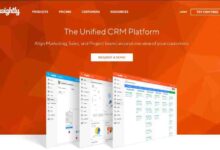
5. Insightly
Insightly is a great choice for small businesses that need project management alongside CRM functionality.
- Key Features: Project tracking, contact management, workflow automation, and customer lifecycle management.
- Pricing: Starts at $29/user/month; free trial available.
- Best For: Service-based businesses managing client projects.
If your business delivers services or manages long-term client engagements, Insightly bridges the gap between CRM and project management. You can link tasks, milestones, and deliverables directly to customer records.
Key Features to Look for in CRM Software for Small Businesses
Not all CRM systems are created equal. When evaluating CRM software for small businesses, focus on features that deliver real value without overwhelming your team.
User-Friendly Interface
Adoption is the biggest hurdle in CRM implementation. If the system is too complex, your team won’t use it consistently. Look for platforms with intuitive navigation, drag-and-drop functionality, and minimal learning curve.
- Mobile accessibility is a must—your team should be able to access the CRM on smartphones and tablets.
- Customizable dashboards allow users to see what matters most to them.
- Onboarding tutorials and in-app guidance improve user retention.
HubSpot and Freshsales excel in this area, offering guided tours and tooltips that help new users get started quickly.
crm software for small businesses – Crm software for small businesses menjadi aspek penting yang dibahas di sini.
Automation and Workflow Tools
Time is your most valuable resource as a small business owner. Automation helps you do more with less.
- Automate follow-up emails after a lead fills out a form.
- Set up task reminders for sales reps to call prospects.
- Trigger notifications when a deal stage changes.
Zoho CRM’s workflow automation allows you to create multi-step rules based on specific triggers. For example, if a lead opens your email three times, they’re automatically tagged as ‘high interest’ and assigned to a senior salesperson.
Integration Capabilities
Your CRM shouldn’t exist in isolation. It should connect with your email, calendar, marketing tools, and accounting software.
- Popular integrations include Gmail, Outlook, Slack, Mailchimp, QuickBooks, and Zoom.
- API access allows for custom integrations if needed.
- Zapier support expands connectivity to thousands of apps.
For example, connecting your CRM to Mailchimp lets you sync contact lists and track campaign performance directly within the CRM. This eliminates double data entry and improves accuracy.
How to Choose the Right CRM Software for Small Businesses
Selecting the right CRM software for small businesses requires careful evaluation of your goals, team size, budget, and technical needs.
Assess Your Business Needs
Start by identifying your pain points. Are you losing leads? Struggling with follow-ups? Need better reporting? Define what you want the CRM to solve.
- Map out your sales process from lead capture to closing.
- List essential features: contact management, email tracking, task automation, etc.
- Determine if you need industry-specific functionality (e.g., real estate, e-commerce).
A clear understanding of your requirements will help you avoid overpaying for unnecessary features.
Consider Scalability
Choose a CRM that grows with your business. A tool that works for 5 employees should still be effective when you have 50.
- Look for tiered pricing plans that allow gradual upgrades.
- Check if the CRM supports additional users, modules, and integrations.
- Ensure data migration is easy if you switch platforms later.
Salesforce and HubSpot are excellent choices for scalability, offering modular upgrades as your business expands.
Test Before You Commit
Most CRM providers offer free trials or freemium versions. Take advantage of these to test usability and functionality.
crm software for small businesses – Crm software for small businesses menjadi aspek penting yang dibahas di sini.
- Invite key team members to try the CRM and gather feedback.
- Import sample data to see how it handles your real-world scenarios.
- Test mobile access and offline capabilities.
For instance, try setting up a sample sales pipeline in Zoho CRM or sending a tracked email in Freshsales. Real-world testing reveals usability issues that reviews might miss.
Common Mistakes to Avoid When Implementing CRM Software for Small Businesses
Even the best CRM software for small businesses can fail if implemented poorly. Avoid these common pitfalls to ensure success.
Poor Data Migration and Cleanup
Migrating messy or outdated data into a new CRM can create more problems than it solves. Before importing, clean your existing data.
- Remove duplicate contacts and outdated entries.
- Standardize naming conventions (e.g., ‘Mr.’, ‘Ms.’, company names).
- Verify email addresses and phone numbers.
According to CIO.com, poor data quality costs businesses an average of $12.9 million annually. A clean start ensures accurate reporting and better customer engagement.
Lack of Team Training
Even the most intuitive CRM requires some training. Without proper onboarding, team members may use the system incorrectly or avoid it altogether.
- Conduct hands-on training sessions.
- Create internal documentation or video tutorials.
- Appoint a CRM champion to answer questions and encourage adoption.
HubSpot Academy offers free CRM training courses that can help your team get up to speed quickly.
Over-Customization
While customization is powerful, overdoing it can lead to complexity and maintenance issues. Start with default settings and only customize what’s necessary.
- Avoid creating too many custom fields or workflows initially.
- Focus on core processes before adding advanced automations.
- Review customization quarterly to remove unused elements.
“Simplicity is the ultimate sophistication.” — Leonardo da Vinci
This principle applies to CRM implementation. A streamlined system is more likely to be used consistently.
Benefits of Using CRM Software for Small Businesses
When implemented correctly, CRM software for small businesses delivers measurable benefits across sales, marketing, and customer service.
Increased Sales Efficiency
CRM systems reduce manual work and help sales teams focus on high-value activities.
crm software for small businesses – Crm software for small businesses menjadi aspek penting yang dibahas di sini.
- Automated lead assignment ensures no prospect is ignored.
- Task reminders prevent missed follow-ups.
- Deal tracking helps identify bottlenecks in the sales process.
A study by Nucleus Research found that CRM delivers an average return of $8.71 for every dollar spent—making it one of the most cost-effective business tools available.
Enhanced Customer Retention
Happy customers are repeat customers. CRM software helps you build stronger relationships through personalized communication.
- Track customer preferences and past purchases.
- Send personalized offers and birthday messages.
- Resolve issues faster with complete interaction history.
According to Investopedia, increasing customer retention rates by 5% can increase profits by 25% to 95%. CRM makes this achievable by keeping customer insights at your fingertips.
Better Decision-Making with Analytics
CRM dashboards provide real-time insights into sales performance, customer behavior, and team productivity.
- Monitor key metrics like conversion rates, average deal size, and sales cycle length.
- Generate reports to share with stakeholders.
- Use forecasting tools to plan inventory and staffing.
For example, if your data shows that most deals close in the last week of the month, you can time marketing campaigns to feed the pipeline accordingly.
Future Trends in CRM Software for Small Businesses
The CRM landscape is evolving rapidly, driven by AI, mobile technology, and customer expectations. Staying ahead of trends ensures your business remains competitive.
AI-Powered Insights and Automation
Artificial Intelligence is no longer a luxury—it’s becoming standard in CRM platforms.
- AI predicts which leads are most likely to convert.
- Chatbots handle initial customer inquiries 24/7.
- Natural language processing summarizes call transcripts and emails.
Zoho’s Zia and Salesforce’s Einstein AI are leading this shift, offering smart recommendations and automating repetitive tasks.
Mobile-First CRM Design
With remote work and field sales on the rise, mobile CRM access is essential.
- Full-featured mobile apps allow data entry and updates on the go.
- Offline mode ensures functionality without internet.
- GPS tracking helps schedule nearby meetings efficiently.
Freshsales and HubSpot have invested heavily in mobile UX, ensuring seamless experiences across devices.
crm software for small businesses – Crm software for small businesses menjadi aspek penting yang dibahas di sini.
Integration with Customer Experience (CX) Platforms
The future of CRM is not just managing relationships—it’s enhancing the entire customer journey.
- CRM systems are integrating with help desks, feedback tools, and social media.
- Unified customer profiles combine sales, service, and support data.
- Proactive engagement based on behavior triggers (e.g., cart abandonment).
Platforms like Salesforce and HubSpot are evolving into full Customer Experience (CX) suites, offering end-to-end journey management.
What is the best CRM software for small businesses?
The best CRM software for small businesses depends on your specific needs. HubSpot CRM is ideal for startups due to its free plan and ease of use. Zoho CRM offers powerful automation for growing teams. Salesforce Starter is great for businesses planning to scale. Freshsales excels in communication features, while Insightly is perfect for project-based services.
Is CRM software worth it for small businesses?
Yes, CRM software is absolutely worth it for small businesses. It improves organization, boosts sales efficiency, enhances customer service, and provides valuable insights. Even basic CRM use can lead to a 29% increase in sales performance, according to Salesforce.
Can I use CRM software for free?
Yes, several CRM platforms offer free versions. HubSpot CRM, Zoho CRM (up to 3 users), and Freshsales (up to 3 users) all have robust free plans suitable for small teams. These include core features like contact management, deal tracking, and email integration.
How long does it take to implement a CRM?
Implementation time varies. Simple CRMs like HubSpot can be set up in a day. More complex systems may take 2–4 weeks, including data migration, team training, and customization. Using a phased rollout can minimize disruption.
crm software for small businesses – Crm software for small businesses menjadi aspek penting yang dibahas di sini.
Do I need technical skills to use CRM software?
No, most modern CRM software for small businesses is designed for non-technical users. Platforms like HubSpot and Freshsales have intuitive interfaces, drag-and-drop builders, and in-app guidance. Technical support and online tutorials are also widely available.
CRM software for small businesses is no longer a luxury—it’s a necessity. From improving sales efficiency to enhancing customer relationships, the right CRM can transform how you operate. By choosing a platform that fits your budget, needs, and growth plans, you set your business up for long-term success. Whether you start with a free tool like HubSpot or invest in a scalable solution like Salesforce, the key is to start now. The future of small business growth is relationship-driven, and CRM is the engine that powers it.
Recommended for you 👇
Further Reading: